
Choose the Right Kailua Residents Directory Clue
Start with what you already know. An address leads first to the City and County of Honolulu Real Property Assessment Division, RPAD. From there it goes to the parcel's Tax Map Key. A name can go into eCourt Kōkua, the Bureau of Conveyances index, or a narrower official registry. Pick the narrower registry when the purpose fits. A year points toward the State Archives, library catalogs, newspapers, census material, and historical directories. Each route answers a different question. So note the source label beside every result you save.
None of these sources lists everyone in a Kailua household. An assessment names an owner or claimant. A deed names parties to a transaction. A court result reflects a case. Directory entries grow old. Voter tools exist chiefly so a voter can check registration or find a ballot. Treat the Kailua residents directory as an evidence trail. It is never proof that every named person occupies an address today.
- Normalize the name, street spelling, apartment or CPR suffix, and date range before searching.
- For an address, find the 12-digit Property ID in RPAD and preserve the situs address separately from the mailing address.
- Carry the TMK or instrument clue into BOC, DPP, HoLIS, or another official index.
- For a person, compare at least two independent details such as middle name, case date, parcel, or document role.
- When the record is not online, use the agency counter, written request, library, archives, or UIPA route.
Where Kailua Residents Directory Records Live
Kailua has no deed recorder or municipal court of its own. Property assessments and permits live in City and County of Honolulu systems. Conveyances go to a statewide recorder. Cases run through the Hawaiʻi State Judiciary's First Circuit. Elections records split between state online tools and the Honolulu Elections Division. Custody is the key to an accurate search. The Kailua street directory walks through the full address-to-parcel path. The offices below orient the broader search.
DLNR Bureau of Conveyances
1151 Punchbowl Street, Room 120
Honolulu, HI 96813
808-587-0147
Honolulu Elections Division
530 S King Street, Room 100
Honolulu, HI 96813
808-768-3800
Kailua Deeds Begin With a Statewide Index
Hawaiʻi runs one of only two statewide recording systems in the country. A Kailua deed search starts at the DLNR Bureau of Conveyances. It does not start at a Honolulu County recorder. BOC handles both Regular System and Land Court documents: deeds, mortgages, liens, releases, easements, declarations, plats, and related instruments. Its online route reaches documents recorded from 1976 onward. Anything earlier takes a written search request or time in the public reference room.
The current portal requires an account, though searching is free once you register. Controls include grantor or grantee, TMK, and Transfer Certificate of Title. You can also search by document number or range and recording date. Images stay blurred and watermarked until purchased. The BOC Document Search and Ordering portal shows that account and purchase gate plainly.
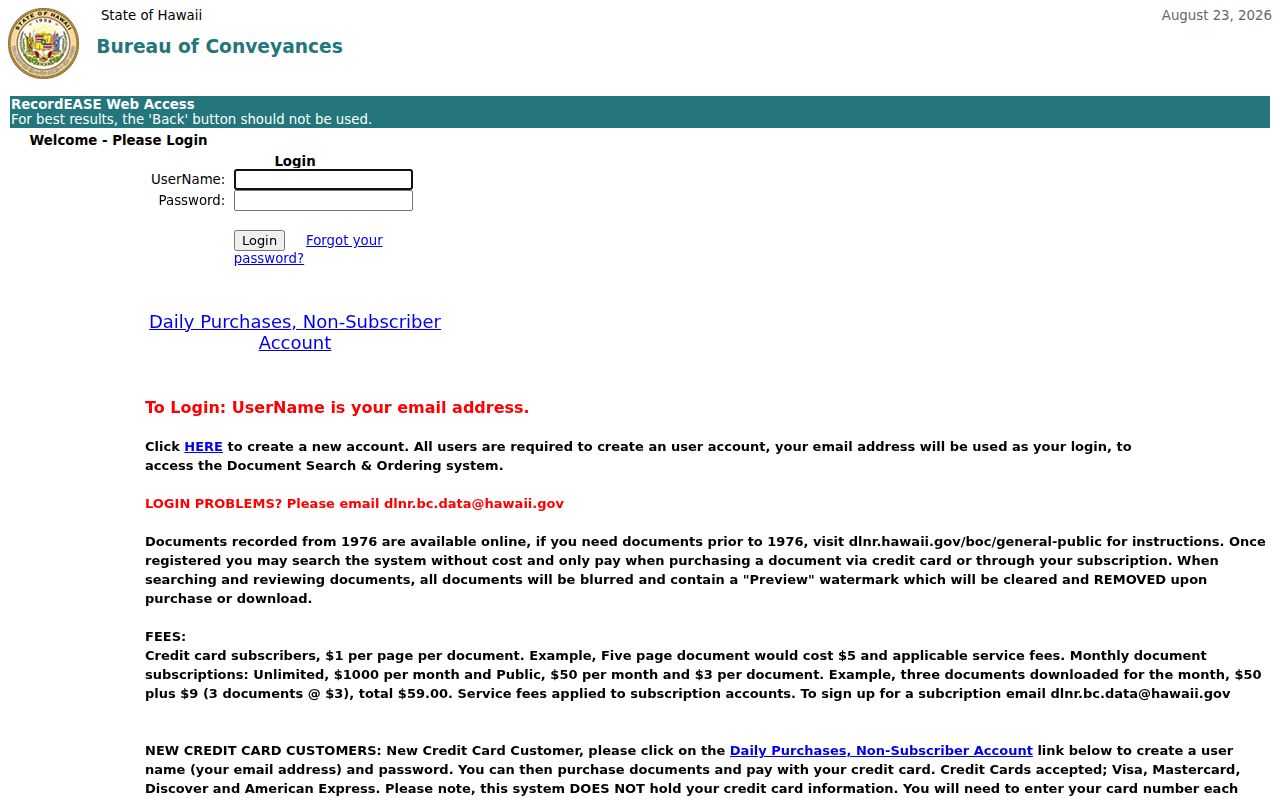
The screen shows why a free name hit and a readable image are separate stages. Save the document number, recording date, document type, party role, TMK, and the Regular or Land Court label first. Then decide whether a paid image or certified copy is worth it.
Record terms
Roll: an official list kept for a defined purpose. Index: a finding aid that points to a record without being the record itself. Parcel: mapped land identified by a TMK. Criss-cross directory: a directory arranged by address or street rather than by surname alone.
Read a Kailua Parcel Card Without Guessing
RPAD is the first official stop for any modern Kailua parcel. Its documentation supports searches by site address or a 12-digit TMK, also called Property ID. A property record can hold current and historic assessment and tax data. It also lists classification, exemptions, land, improvements, sales, and permit history. The fee owner, exemption claimant, lessee or assignee, and notice mailing address each appear as distinct fields. None of them silently converts into a claim about who sleeps at the property. The RPAD property-search landing page leads to the official search application. It also explains the assessment context.
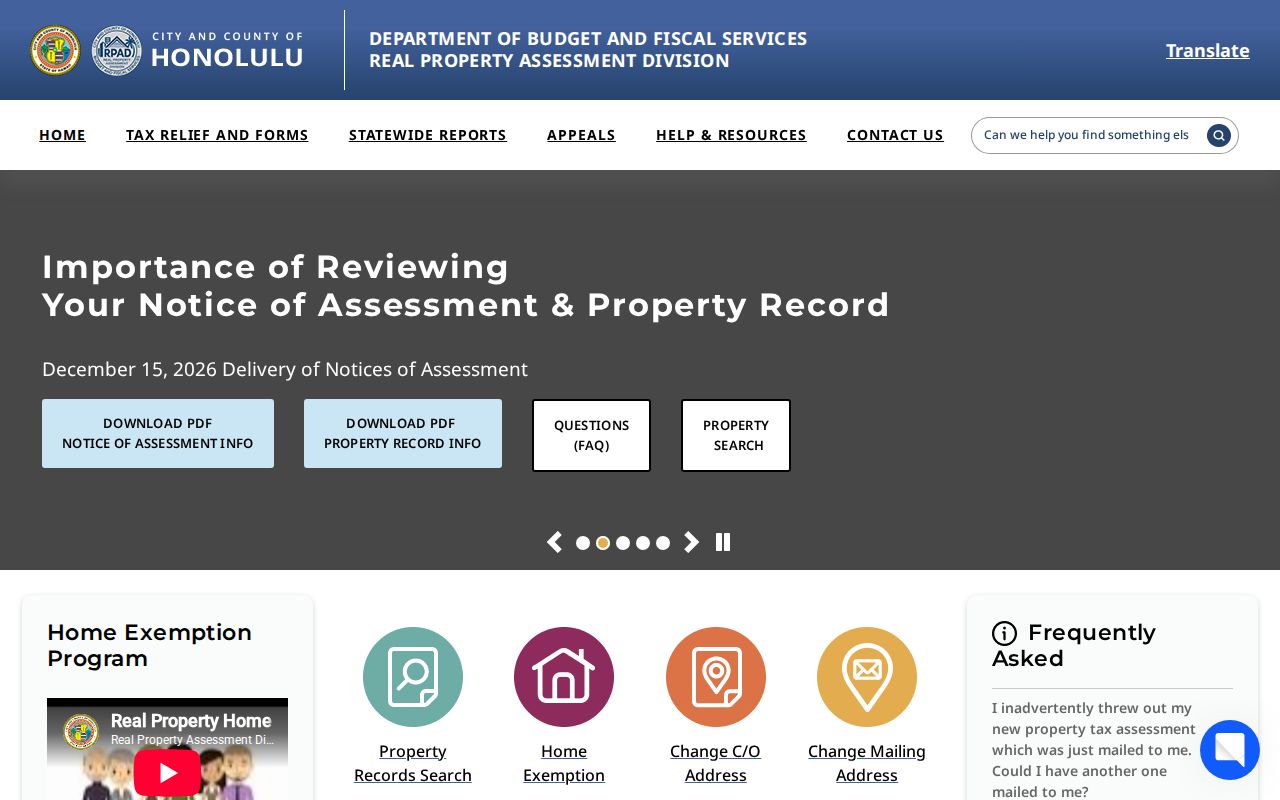
Keep the situs address, mailing address, owner field, and TMK in separate notes. The site says data updates Monday mornings in Hawaiʻi time, and it warns that online information is not legal documentation. The qPublic form's field order and result limits may vary.
| RPAD clue | What it can establish | What it cannot establish |
|---|---|---|
| Site address | The physical parcel location | The names of all occupants |
| 12-digit TMK | A stable parcel-search key | A person's identity by itself |
| Fee owner | The assessment owner field | Current presence at the site |
| Mailing or c/o address | Where notices are sent | The parcel's situs or an owner's home |
| Sales and permit history | Dates and links for deeper research | A complete chain without source records |
Permits Add a Dated Kailua Address Trail
The Honolulu Department of Planning and Permitting ties a Kailua address to building activity, zoning, subdivision, and assigned-address records. HNL Build serves current customer workflows. The legacy Building Permit Search exposes useful fields: application number, permit number, house-number parts, street name without the street type, an eight-digit TMK, and created, issued, or completed date ranges. Results export to Excel, but a summary is not the complete permit file.
Does the portal not answer the question? The DPP Data Access Imaging Branch takes requests to view records by phone at 808-768-8277 or email at dppdaib@honolulu.gov. DPP lists its public hours as weekdays, 7:45 a.m. to 4:30 p.m. This fallback matters in a careful Kailua record search. Permit parties and owners add dated context without ever proving residence.
| Permit search input | Format or use |
|---|---|
| Application or permit number | Best exact-document route |
| House prefix, number, suffix | Separates address components |
| Street name | Enter without street type |
| TMK | Eight digits without dash or colon |
| Created, issue, completed dates | Each accepts a date range |
Current Kailua Residents Directory Sources
Kailua has no single merged directory of current residents. What exists is a set of narrow official lists, each kept for its own purpose. Pick the record that matches your question. RPAD works well for assessed parcels. The Bureau of Conveyances tracks land transactions. eCourt Kōkua indexes public court matters. OLVR handles a voter's own registration plus an address-based ballot search. For licenses and business filings, PVL and BREG are the right stops. A name appearing in any one source only means what that source says it means.
| Source | Who It Lists | Keeper | Access |
|---|---|---|---|
| RPAD property records | Fee owners and parcel facts | Honolulu RPAD | Free portal |
| BOC document index | Parties to recorded instruments | DLNR Bureau of Conveyances | Free search after account |
| eCourt Kōkua | Named parties in public cases | Hawaiʻi State Judiciary | Index free, some documents paid |
| PVL public search | Licensed professionals | DCCA | Free public search |
| Kailua Board records | Named civic participants | Neighborhood Commission | Agendas and minutes online |
Let the official record set the wording of any conclusion. "Named as grantee," "listed as fee owner," or "party in a case" each carry more precision than the word "resident." For tracking a single name through Kailua records, the Kailua resident lookup shows how to handle same-name matches and restricted records.
What Hawaiʻi Voter Records Do and Do Not Reveal
Hawaiʻi Revised Statutes § 11-97 opens a narrow window. It makes a voter's full name public. It also discloses district or precinct designation, voter status, and participation history. The rest of the registration affidavit stays confidential. Only authorized election or government use can reach it. OLVR serves a different purpose. It lets voters confirm or update their own registration. Its alternate ballot search takes island and address information to display a ballot. Neither tool functions as a public block-by-block resident list for Kailua.
The OLVR registration screen displays the identity fields and the safeguards protecting the online process.
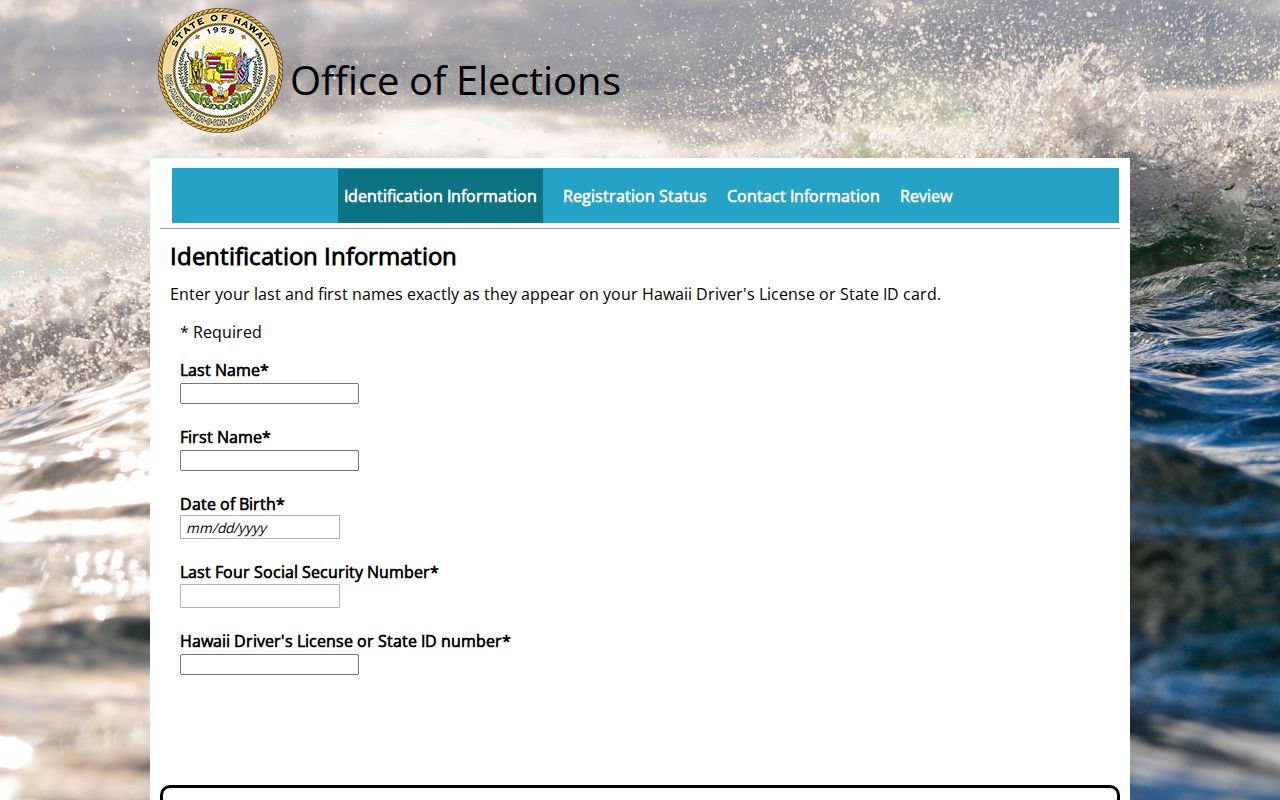
That screen marks the line between self-service registration and public access to the voter file. Anything broader goes through the election custodian under the statute, with confidential affidavit data withheld.
Kailua Court Names Need a Second Match
Kailua sits in the First Circuit. Kaneohe District Court is the closest district courthouse for residents. eCourt Kōkua handles party, case, hearing, and document searches, and its current manual documents the filters available: party type, last or business name, first and middle name, case ID, filing date, court, case type, and status. Results arrive in chunks of up to 200, with 20 per page as the default. Sealed and in-camera material never appears.
Use the eCourt Kōkua navigation page to enter the Judiciary's public route.
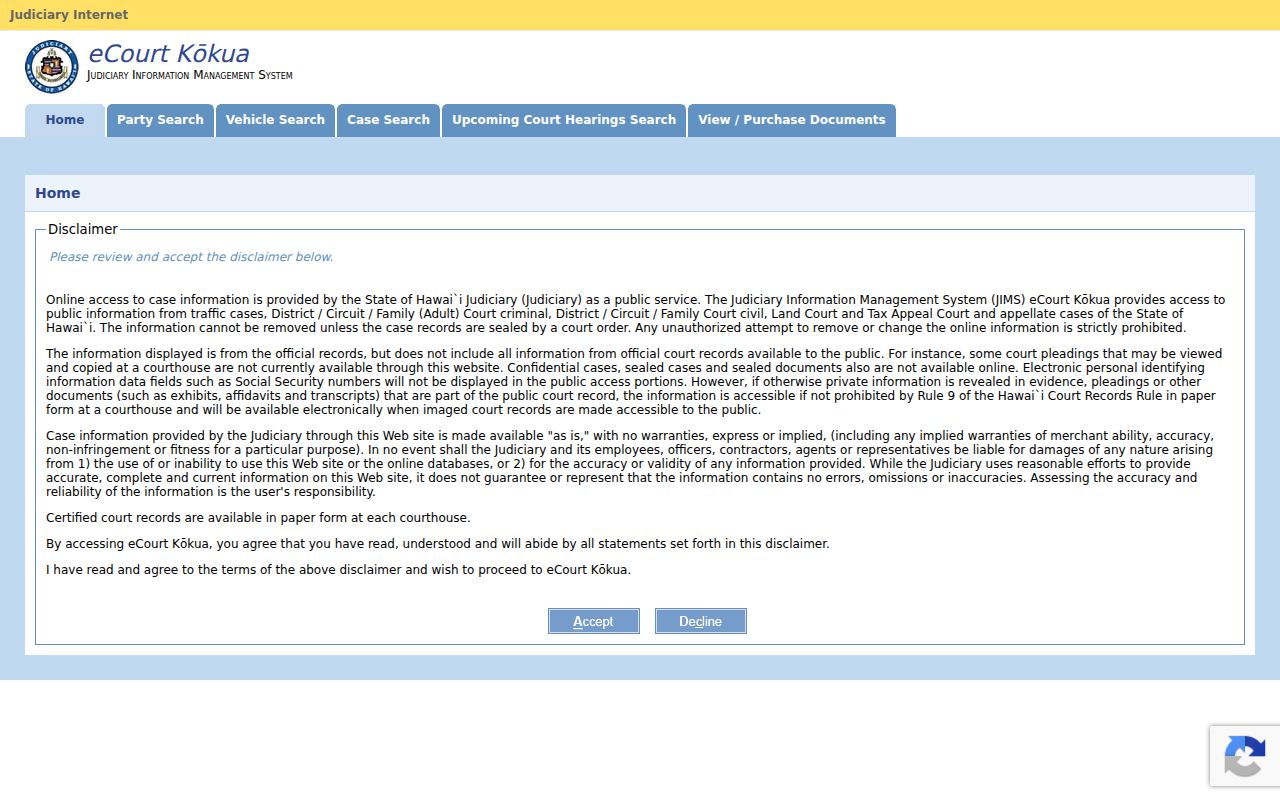
A case caption is not a resident profile. Write down the case ID, court, party role, filing date, case type, and docket event, then compare those details against a separate source. Older files and documents not online may call for the Kaneohe or Honolulu public-access terminal, or a First Circuit records request.
When the Kailua Record Is Not Online
For government records that are not posted anywhere, the Hawaiʻi Uniform Information Practices Act, HRS chapter 92F, offers an agency-first route. Address the request to the agency holding the record. Describe the title, date range, people or property involved, and preferred inspection or copy format, then add contact information. The normal response target is ten business days, with an extension to twenty for extenuating circumstances. Fees follow HAR chapter 2-71.
A UIPA request cannot unlock restricted records. Vital certificates generally require a direct and tangible interest under HRS § 338-18, sensitive voter-affidavit fields stay confidential, and the Address Confidentiality Program gives qualifying survivors a substitute address with mail forwarding. For older materials, the better fallback may be a library reference request, State Archives catalog search, BOC written request, or courthouse terminal.
Lawful personal use. Use public records for family history, estate work, civic research, reconnecting, or personal safety. Never use a directory trail to stalk, harass, intimidate, or defeat an address-protection program.
Police Reports Are Not a Kailua Resident Roll
Honolulu Police Department records can answer a defined incident question. They are not a general way to identify Kailua households. Eligible non-emergency incidents may be reported online. A call then follows from 808-768-0000, and a report number is issued once the information is accepted. Completed or closed report and body-worn-camera requests go through the HPD Records and Identification Division or a UIPA channel. The request should identify the report number when known, the date, time and location, and the kind of report. It should also list involved names, contact details, and whether it concerns a written report or camera record.
HPD may require a color copy of government identification to show involvement. Next-of-kin or authorization proof may also be needed when relevant. Releases remain subject to HRS § 92F-13. Redactions can strip out names, home addresses, dates of birth, telephone numbers, and other protected details. The HPD police-report request guide lays out the channels, identity requirements, and copy fees.
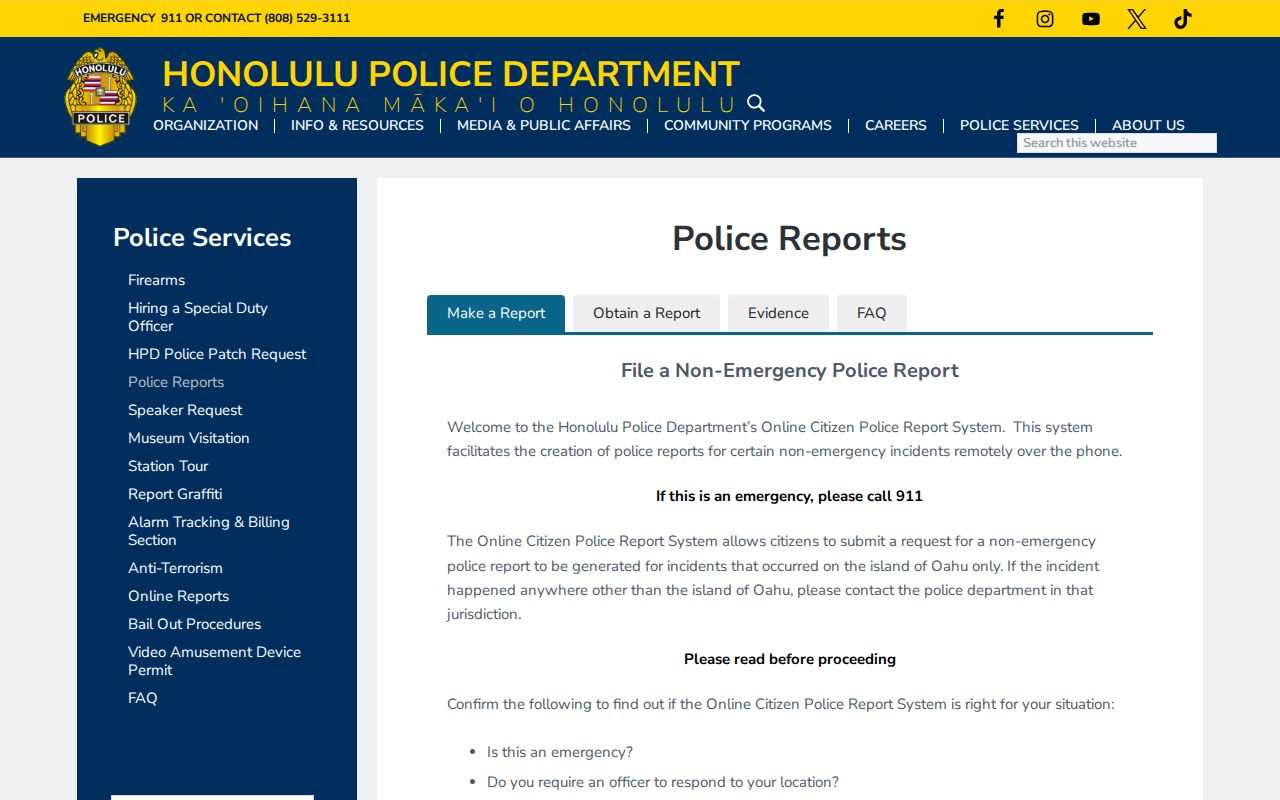
The request screen sets expectations before any personal information is submitted. The Records and Identification Division sits at 801 S Beretania Street in Honolulu. Its Records Unit lists weekday hours of 7:45 a.m. to 4 p.m. A main records number is 808-723-3258. Treat any released document as incident evidence tied to its date and case. It is never a current directory entry.
Official Rolls and Commercial Search Results
Official records move slower, and for good reason. Each has a defined keeper, purpose, date, and correction route. That structure also exposes the limits of what it holds. A BOC index can lead to a recorded image. An RPAD card carries an assessment date. A court docket names a case and court, so each record points somewhere specific. Commercial people-search tools operate differently. They may merge older addresses, phone data, and names. They do not show how each item was sourced or when it changed.
Official source
Best when you need a precise fact. Official rolls tie each entry to an agency, a record date, and a custodian who can correct it.
Commercial category
Commercial results can build a lead. Yet they may be stale, merged, or incomplete, and they drift from the underlying record.
Confirm any useful lead at the originating office. A paid compilation should never blur the difference between a property owner, mailing contact, prior address, relative, or current occupant.
Historical Kailua Residents Directory Trails
Directory trails for Kailua run deep. The State Archives and the Hawaiʻi State Library's Hawaiʻi and Pacific Collection hold the longest thread, stretching from Kingdom-era statistical and commercial guides through the Husted and Polk titles. UH eVols contributes selected digitized volumes. For Kailua specifically, the Windward Register stands out. It is listed as an annual Kailua, Oʻahu run beginning in 1958, with classified business and professional entries and a street-guide map. Whether every year survives still needs confirmation.
The Kailua Public Library at 239 Kuulei Road serves as the local reference gateway. Its public page names no directory shelf, but staff can route requests toward licensed databases and the broader Hawaiʻi and Pacific holdings. The Hawaiian Historical Society adds noncirculating books, manuscripts, and newspapers, with reading-room visits by appointment. Publishers, abbreviations, reverse directories, and household tracing get a fuller account in the Kailua city directory collections.
Kailua Place Names Change the Search
One place, many labels. A single record may call the same area Kailua, Windward Oʻahu, or Koʻolaupoko. It may also say an ahupuaʻa, Honolulu County, or the City and County of Honolulu. DLNR describes Kailua as a political center of Koʻolaupoko around 1750. Aliʻi houses stood near Kailua Bay. Kingdom, Territory, County of Oʻahu, and City and County labels followed in later government eras. Keep the name exactly as printed. Then add the modern equivalent in a separate field.
Modern boundaries disagree too. ZIP 96734 belongs to Kailua. Nearby 96795 is Waimanalo, yet regional datasets may merge them. Kailua Neighborhood Board 31, the Census-designated place, and USPS delivery geography each draw a different line. RPAD parcels draw yet another. A residents directory result works best when it keeps its ZIP, board, TMK, street range, and date intact. Forcing every source into one city label loses that.